In the 2024 U.S. presidential election, Donald Trump’s return to the White House was not only due to the support of his grassroots fan base and the Republican establishment but also because of the involvement and strong backing of billionaire Elon Musk. This business magnate, who dominates multiple industries such as aerospace, the internet, and automotive technology—and is also the world’s richest man—leveraged vast resources and platforms to rally support for Trump, helping him defeat Kamala Harris, who had once led in the polls, and reclaim the presidency.
Recently, Musk has fiercely criticized the ruling Labour government in the U.K., expressing dissatisfaction with its immigration policies and stance on crimes involving Muslim offenders, while encouraging white right-wing populists to oppose the government. Earlier, he also made controversial remarks on German politics, the Russia-Ukraine war, and other international issues, including supporting the far-right “Alternative for Germany” party, defending Putin’s invasion, and criticizing Ukraine. These actions indicate that Musk’s political interventions have extended beyond the United States, positioning him as a billionaire-politician who seeks to influence and even dominate global political trends. Notably, the Trump he supports is also a businessman and a U.S. billionaire.
Businesspeople and billionaires engaging in politics enjoy unique advantages. First, due to the nature of their wealth accumulation, they frequently interact with politicians, giving them a deeper understanding of political power, a higher participation frequency, and a greater ability to influence government affairs compared to ordinary citizens. Second, billionaires possess immense personal wealth, which can be converted into substantial political influence. Third, many billionaires achieve their status through exceptional business acumen and interpersonal skills, which provide a strong foundation for political engagement, making their transition into politics relatively seamless. Furthermore, beyond material wealth, many billionaires develop broader aspirations and idealistic goals, with politics serving as a crucial avenue for realizing those ambitions.
In the 20th century, numerous businesspeople and billionaires ventured into politics. Among them, the most politically and ideologically influential figure was George Soros.
Born in Hungary, educated in the U.K., and later immigrating to the U.S., Soros—a Jewish businessman who lived through Nazi rule, World War II, and the Cold War—developed a strong desire to engage in politics and change the world, likely due to his complex life experiences and multifaceted identity. After amassing vast wealth, Soros dedicated significant financial resources to supporting specific political groups in the U.S. and other countries.
In the U.S., Soros has been an outspoken supporter of the Democratic Party and progressive movements, playing a crucial role in Barack Obama’s presidential victories in 2008 and 2012, as well as backing Hillary Clinton in 2016. Internationally, he has actively supported opposition groups in authoritarian states, promoted liberal democracy, and championed the concept of an “open society.” In his birthplace, Budapest, he founded Central European University to train young leaders committed to freedom and progress. Additionally, Soros has strongly advocated for women’s rights, LGBTQ+ rights, environmental protection, and the rights of minorities and marginalized groups.
Soros’ activities have had significant impacts and achieved notable results, but they have also sparked major controversies. Right-wing figures in the U.S. and Europe criticize him as a manipulator of global politics and the mastermind behind the “deep state” that controls establishment politicians. Meanwhile, authoritarian regimes such as China and Russia accuse him of interfering in their domestic affairs.
Beyond Soros, other billionaires like Bill Gates and Warren Buffett have also actively engaged in public affairs, though their political involvement is relatively moderate and neutral.
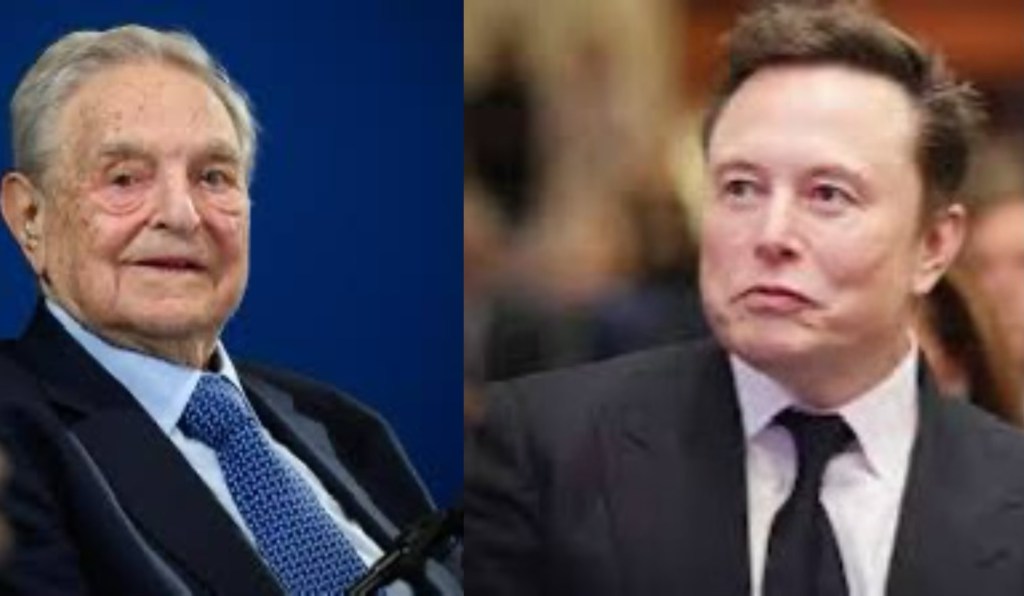
Today, Musk, like Soros, is both a businessman and a billionaire who is passionate about politics, but their values and political stances are starkly opposed. Musk is a vocal supporter of the Republican Party and the right wing, often exhibiting a strong populist streak while opposing the Democratic Party and progressive movements. Internationally, he leans toward supporting Putin’s Russia and other authoritarian regimes, while aligning himself with the rise of right-wing populism in Europe. Hungarian Prime Minister Viktor Orbán—who has a longstanding rivalry with Soros—maintains close ties with Musk, with the two even dining together at Trump’s Mar-a-Lago estate. Musk also endorses Western white identity politics and a “native-first” ideology. Although both Musk and Soros claim to champion and defend “freedom,” their definitions, criteria, and target groups for this concept are fundamentally different.
Compared to Soros’ idealism, Musk prioritizes efficiency and profit, displaying a strong tendency toward social Darwinism. One could even argue that Musk sees efficiency and social Darwinism as ideals in themselves, seeking to influence government policies and civil society to instill these values in the broader public.
Unlike Soros—who, despite his radicalism, generally adheres to legal procedures and exercises caution in his public statements—Musk is more individualistic, unrestrained, and unpredictable. His acquisition of Twitter, rebranding it as “X,” and transformation of its content policies, his high-risk experiments with SpaceX’s Starship, and his provocative political statements in both U.S. and global affairs all reflect this bold and unconventional approach. Some of these actions have been lauded for their innovation and adventurous spirit, while others have sparked concern and unease.
Regardless of their differences, both Soros and Musk have profoundly influenced American and international politics, even playing the role of “kingmakers” in determining the leader of the world’s most powerful country. Musk’s deep involvement in shaping Trump’s presidential transition—such as his influence on H-1B visa policies, key personnel appointments, and even clashes with Trump’s grassroots supporters—has intensified concerns over the entanglement of business and politics. Even within Trump’s own circle, voices have emerged questioning Musk’s interference in government affairs. Ironically, Musk and other right-wing populists in the U.S. have frequently criticized Soros for manipulating American politics as a businessman, yet Musk himself now faces the same accusations.
In major powers such as Russia and China, there have also been high-profile oligarchs and business magnates—such as Boris Berezovsky, Mikhail Khodorkovsky, Jack Ma, and Ren Zhiqiang—who actively engaged in politics. However, due to systemic constraints or shifts in political power, many were forced out of the political arena, with some even imprisoned. Their willingness to take enormous risks to participate in politics despite operating in highly restrictive environments highlights the powerful allure of politics for business elites. Similarly, countries like India, Japan, and Mexico have seen numerous business figures deeply embedded in politics, significantly shaping national policies.
The involvement of billionaires in politics presents both advantages and drawbacks. The extent of these benefits and risks depends on the political system, social environment, the power structures backing them, and their personal character and values. As citizens, billionaires have the right to participate in politics, but they must also be subject to legal and ethical constraints. Their wealth, though a product of personal effort, is also built upon broader societal development and collective labor. As Warren Buffett once stated, billionaires, having gained from society, must also give back to society.
Most importantly, billionaires and other influential figures must recognize that their immense power comes with greater responsibility. Their political involvement must be tempered with self-awareness and self-restraint, taking into account the complex and far-reaching consequences of their actions—particularly their impact on vulnerable groups, the stability of domestic and international affairs, and the balance of social justice. Reckless and self-serving political intervention not only harms the general public but ultimately backfires on the billionaires themselves.
 王庆民政治评论